


The Hidden Toll of "High-Functioning" Anxiety: Why Success Doesn’t Always Equal Peace
Some people respond to stress by shutting down. Others respond by doing more—working harder, staying organized, and pushing themselves to perform at a high level. While this “high-functioning anxiety” can look like success on the outside, it often hides a nervous system running on constant overdrive. This article explores why anxiety can drive productivity and how counseling can help restore a healthier balance.

It’s Not Just in Your Head: The Gut-Brain Connection and the Physical Symptoms of Anxiety
Feeling the physical toll of global stress? Learn how the gut-brain axis links anxiety to physical pain and how somatic counseling can provide real relief.

When the World Feels Too Loud: Navigating Individual Anxiety in an Age of Collective Stress
In times of financial uncertainty, global tension, and constant news updates, many people are feeling a quiet but persistent anxiety they can’t quite explain. When the world feels overwhelming, our nervous system can become stuck on high alert. This article explores why collective stress impacts individual anxiety—and practical ways to regain a sense of calm and control.

Why Couples Struggle to Communicate and How to Fix It
Many couples say the same thing: “We just don’t know how to talk to each other anymore.” Communication breakdowns often aren’t about the topic of the argument but the patterns couples fall into when discussing it. In this article, we explore the research behind common destructive communication habits and practical strategies couples can begin using today to rebuild connection.

Beyond the "Roommate Phase": Reclaiming Emotional Intimacy in Your Relationship
Many couples slowly drift into what feels like the “roommate phase”—sharing a home and responsibilities but losing the deeper emotional connection that once defined the relationship. Drawing on attachment theory and relationship research, this article explores why emotional distance develops and how small, intentional moments of connection can help couples rebuild intimacy.
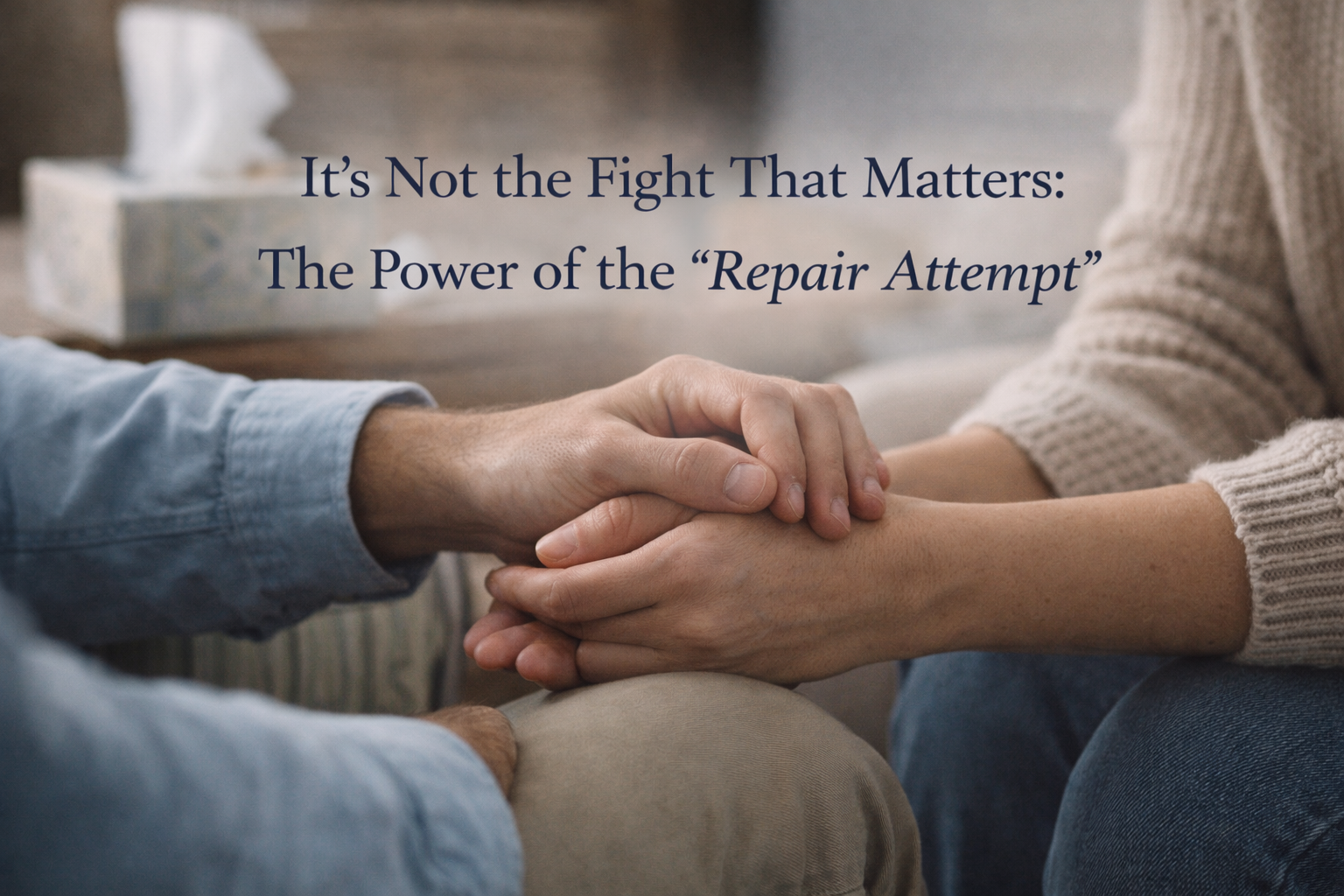
It’s Not the Fight That Matters: The Power of the "Repair Attempt"
Many couples believe that healthy relationships don’t have conflict, but research shows the opposite. The difference between thriving couples and struggling ones isn’t whether they fight—it’s how they repair after the conflict. Learn how small “repair attempts” can stop arguments from escalating and help couples stay emotionally connected even during disagreement.